
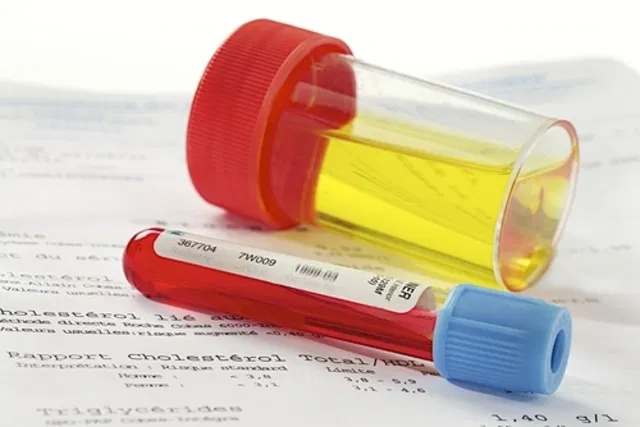
The creatinine clearance test is a key way to check how well the kidneys are filtering waste. It measures the rate at which creatinine, a natural by product of muscle metabolism, is cleared from blood into urine. Normal values are usually between 90–140 mL/min/1.73 m² in adults. The test estimates glomerular filtration rate (GFR), which reflects kidney function. Creatinine is produced at a steady rate by muscles and is normally filtered by the kidneys. If the kidneys are not working well, creatinine builds up in the blood. Clinicians use this test to detect early kidney disease, monitor progression, and adjust medication doses that depend on kidney clearance.
How the Test is Done
Urine is collected over a 24 hour period. A blood test is taken to measure serum creatinine concentration. The laboratory compares urine creatinine concentration, urine volume, and blood creatinine to calculate clearance in millilitres per minute per 1.73 m² body surface area (mL/min/1.73 m²).
Reference Values
Group Normal Range (mL/min/1.73 m²)
Adult men 100–140
Adult women 90–130
Elderly Values decline naturally with age. Children Higher relative values due to growth. Values below 60 mL/min/1.73 m² may suggest chronic kidney disease, while values above 140 can occur in pregnancy or with high muscle mass.
Patient Preparation Tips
• Hydration: Drink your usual amount of fluids; avoid excessive intake.
• Diet: Stick to your normal diet; avoid large amounts of meat before the test, as this can raise creatinine.
• Medications: Inform your doctor about any medicines you are taking, especially antibiotics or drugs affecting kidney function.
• Accuracy: Ensure all urine is collected during the 24 hour period; missing samples can make results unreliable.
What Results Mean
• Normal clearance: Kidneys are effectively filtering waste.
• Reduced clearance: May indicate kidney disease, dehydration, or obstruction.
• Elevated clearance: Sometimes seen in pregnancy or with increased muscle mass.
Important Considerations
• This test is more accurate than serum creatinine alone but can be affected by incomplete urine collection.
• A repeat the test or use other measures like estimated GFR (eGFR) may be included for confirmation.
The creatinine clearance test is a practical way to assess kidney health. By carefully following instructions for urine collection and blood sampling, patients help ensure reliable results that guide clinicians in diagnosis and treatment.