
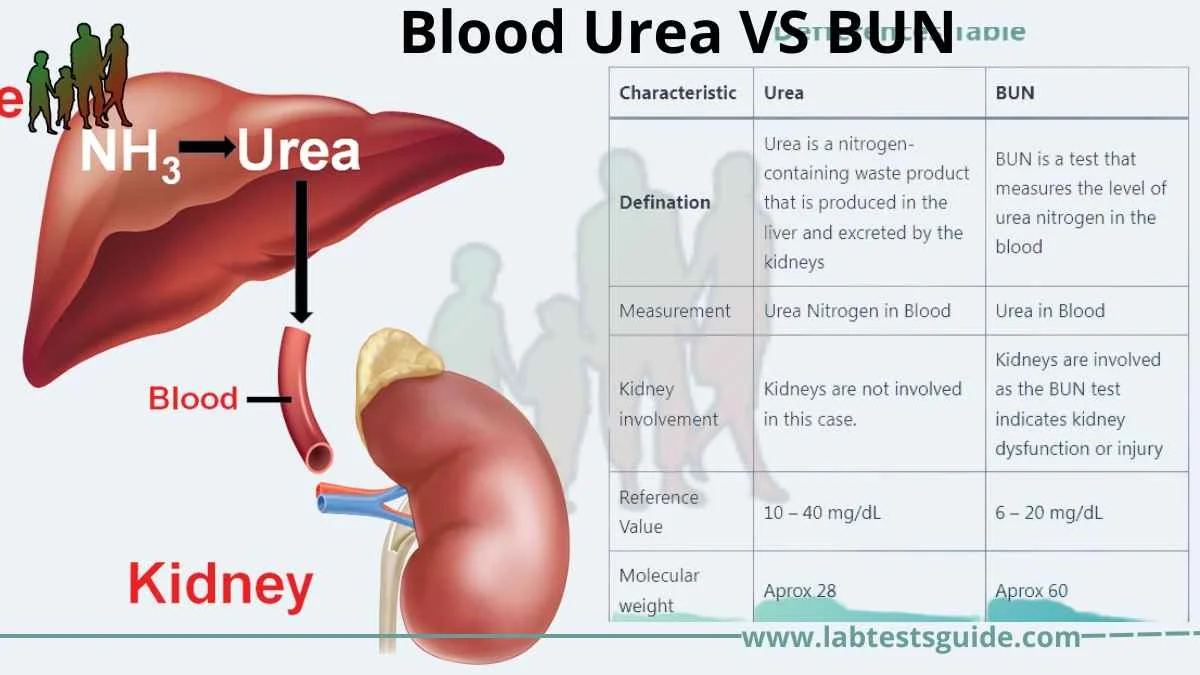
The urea test (often called the Blood Urea Nitrogen or BUN test) measures the amount of urea nitrogen in blood to check how well your kidneys and liver are working. Urea is a waste product formed in the liver when the body breaks down protein. The kidneys filter urea from the blood and excrete it in urine. A urea test (or BUN test) measures the concentration of urea nitrogen in the blood to assess kidney and liver function.
The test is used to: Evaluate kidney health and detect kidney disease; Monitor liver function since urea is produced in the liver; Check protein metabolism in the body; Investigate symptoms like fatigue, swelling, or changes in urination; Monitor chronic conditions such as diabetes, hypertension, or heart disease.
Reference Ranges
- Adults: 7–20 mg/dL (may vary slightly by lab).
- Children: Lower ranges are common.
- Older adults: Levels may be slightly higher.
(Always check with your health provider for lab-specific ranges.)
High urea levels may indicate kidney disease, dehydration, high protein intake, or heart failure. Low urea levels could suggest liver disease, malnutrition, or overhydration. BUN-to-creatinine ratio is often measured together to give a clearer picture of kidney function.








This is very enlightening